What Is a Tisane? Herbal Infusions vs Tea
A tisane is a drink made by infusing plants other than the tea plant in water. Peppermint, chamomile and rooibos are familiar examples. In everyday conversation, we usually call these drinks herbal teas. “Tisane” is simply a more specific name, not a special brewing gadget or a more expensive grade of tea.
The useful distinction is what goes into the cup. It helps you read a menu, choose a blend and understand why two products both called “tea” may need different preparation.
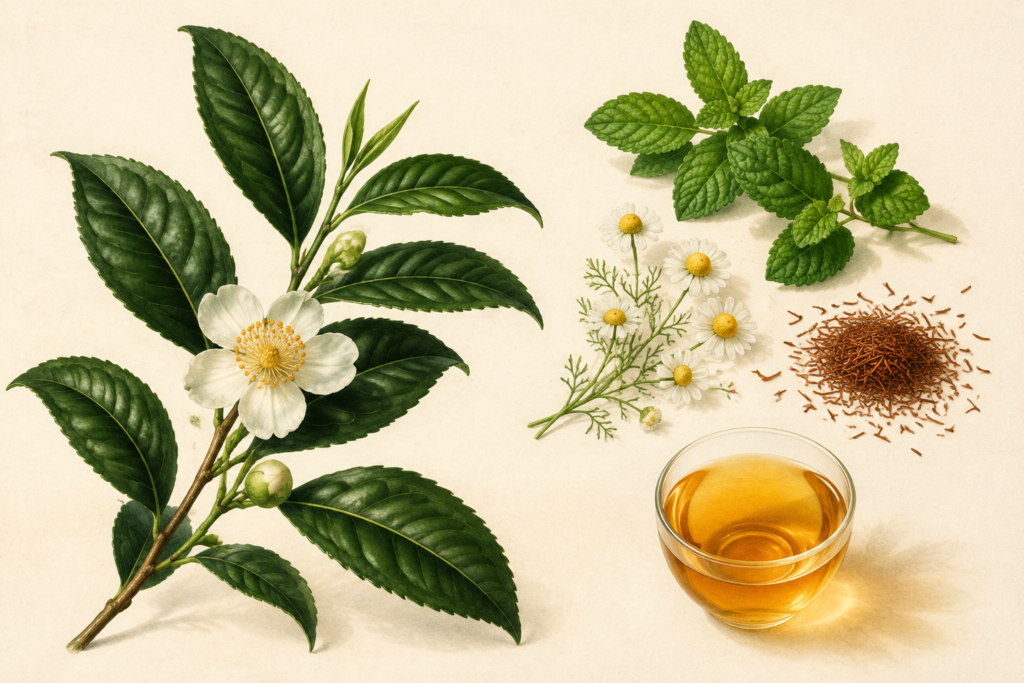
Tea, tisane or a mixture of both?
Tea
Made with leaves of Camellia sinensis, the tea plant. Black and green tea come from this species.
Look for: black tea or green tea in the ingredients.
Tisane
An infusion of other plants: leaves, flowers, roots, bark, fruit or a blend of them.
Look for: the named plants, such as peppermint or rooibos.
A mixed blend
Tea leaves combined with other plants. Adding flowers does not remove the tea leaves.
Look for: both tea and herbs or flowers in the list.
Kew’s tea-plant profile explains that black and green tea come from the same species. Twinings also uses “tisane” for its fruit and herbal infusions, distinguishing them from tea-leaf drinks.
Meet a few different kinds of infusion
The word “herbal” can make you picture a handful of leaves, but an infusion can include much more than that. Mint gives you a leaf-based example. Chamomile brings flowers. Rooibos is another plant entirely; its name on a tea shelf does not make it black tea.
Then there are more layered blends. Our Sirilife Tapee Tea brings together 15 herbs and spices, with Jewel Vine making up 65% of the formula. Rather than guessing at unfamiliar names, you can see every Tapee Tea ingredient with its picture. That page is the detailed reference for our blend; this one explains the wider vocabulary.
A floral tea is not always a flower-only drink
Here is a useful real-world example: ChaTraMue describes its Rose Oolong Tea as oolong tea leaves with rose petals. The roses add another plant, but the drink still contains tea leaves. Its Jasmine Butterfly Pea Tea likewise includes green tea.
Compare that with a packet containing only dried flowers. Similar pictures on the packaging can hide a different starting point. When choosing, read the ingredient list before deciding which category a blend belongs to.
This is also why “tisane” should not be treated as a promise about health effects, caffeine or suitability for everyone. The name describes a type of drink. The individual ingredients and the maker’s product information answer the more specific questions.
Does a tisane come loose or in a tea bag?
Either. Loose herbs need a strainer or infuser to separate the plant material from the drink. A tea bag does that job for you. Both can make an infusion; the bag does not turn mint into tea leaves.
A soluble sachet is a different preparation format. You empty its contents into water and stir rather than leaving a bag to steep. Check the pack carefully: an outer paper sachet may also contain a tea bag, so the word “sachet” alone is not enough to choose the method.
For our two formats, the Tapee Tea preparation guide shows the difference and includes serving ideas.
How to choose your first tisane
Start with the kind of cup you fancy. A single-ingredient infusion makes it easy to get to know one plant’s flavour. A blend gives you several ingredients together. Neither choice is automatically more authentic or better quality.
Next, decide how much preparation fits your day. If you already enjoy using an infuser, loose herbs may suit you. If you would rather lift out a bag and get on with things, bags are convenient. Read the brewing directions before buying a root or bark blend that may need a different method from a delicate leaf infusion.
Finally, keep the name in perspective. You can order a peppermint tea without using the word “tisane.” Knowing the distinction is useful because it helps you choose, not because every cup needs a vocabulary lesson.
Botanical reference: Royal Botanic Gardens, Kew. Named product examples checked against the makers’ descriptions on 7 September 2026. The illustration is not an ingredient-identification guide.