Does Herbal Tea Have Caffeine? How to Read the Ingredients
Many herbal teas are naturally caffeine-free, but the words “herbal tea” do not guarantee it. A blend can include green or black tea, or another caffeine-containing ingredient. Turn the packet over: the complete ingredient list tells you more than the name, colour or picture on the front.
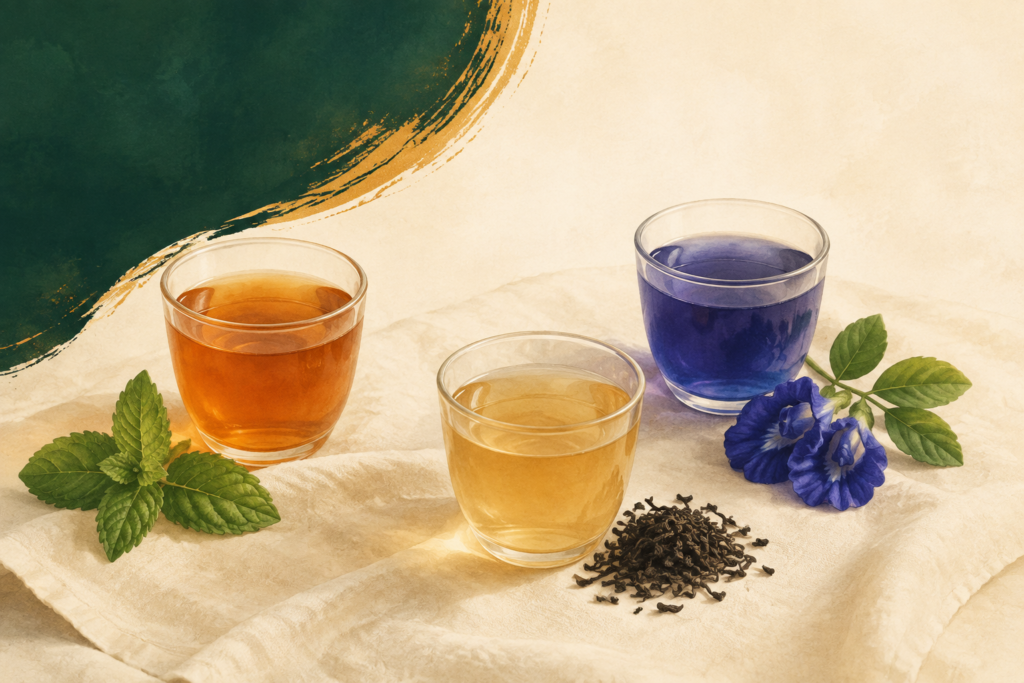
A quick check before you put the kettle on
1. Read the whole blend
Look for black or green tea, yerba mate, guarana, kola, coffee or added caffeine. A flower or fruit in the name does not rule these out.
2. Check the wording
“Decaffeinated” means caffeine has been reduced. It does not mean the same thing as “caffeine-free.”
3. Ask about the exact product
If avoiding caffeine matters to you and the label is unclear, ask the maker. Do not use the colour of the brew as a test.
The FDA identifies several natural caffeine sources in its caffeine education guide. Its consumer guidance also explains that decaffeinated drinks can retain caffeine and that naturally occurring caffeine is not necessarily listed separately as an ingredient.
Two real blends, two different answers
A mint leaf or flower on a box is a useful flavour clue. It is not a full ingredient list. These two examples show why that distinction matters:
Pure peppermint
Twinings Pure Peppermint is labelled as a peppermint infusion and naturally caffeine-free. That statement belongs to this particular product.
Jasmine butterfly pea blend
ChaTraMue’s Jasmine Butterfly Pea Tea includes Thai green tea leaves alongside the flowers. A floral name does not make it a flower-only infusion.
The practical lesson is to compare the same product, formula and market. A loose butterfly pea flower, a flower-and-tea blend and a sweetened instant drink can all arrive under similar names. One answer will not necessarily fit all three.
Does decaf count as caffeine-free?
No. If your pack says decaffeinated black tea, it is still a tea-leaf product with reduced caffeine. If it says caffeine-free peppermint, that is a different kind of statement. Keep those two descriptions separate when choosing what to drink.
There is also a difference between an ingredient-based expectation and a measured amount. A precise claim such as “0 mg per cup” needs evidence for the product and serving being described. A generic chart cannot supply that number for every brand, blend or brewing method.
What about Tapee Tea?
Our Sirilife Tapee Tea is a blend of 15 herbs and spices, available as tea bags and soluble sachets. You can see the names, proportions and pictures in our complete Tapee Tea ingredient guide.
We have not supplied a measured caffeine-per-cup figure here. If you need that level of certainty, use the exact pack information and ask us about the available product evidence before choosing. A general article about herbal tea should not stand in for a result for your particular blend.
Three easy mistakes to avoid
Judging by colour. A pale drink is not a reliable sign of low caffeine, and a dark herbal infusion is not proof of caffeine. Start with the ingredients instead.
Stopping at the first ingredient. A blend may lead with mint, flowers or fruit and still include tea leaves further down the list. Read through to the end, including flavourings and added ingredients.
Assuming all versions are alike. Loose leaves, bags and soluble powders are formats. None of those formats, by itself, tells you whether a drink contains caffeine. Even products with similar names can use different recipes.
If you keep several teas at home, leave each one in its labelled pack or copy the full name onto its storage jar. It makes choosing your next cup much easier than trying to identify a blend by its appearance.