Lab-Tested & Steroid-Free FREE Worldwide Shipping 30-Day Money-Back Guarantee Ships Within 24 Hours
Herbal tea brewing with laboratory equipment and spices for health and wellness.

What Lab Tests Reveal About Your Thai Herbal Tea

Not all Thai herbal teas are created equal. As Thai herbal tea gains popularity worldwide, the market has exploded with products ranging from authentic traditional blends to mass-market imitations. With this growth comes an important question: How do you know what you’re actually drinking?

The quality challenge is real. Recent concerns about contamination in some herbal products have highlighted the importance of knowing your source. While these issues affected certain brands, they reinforced a crucial truth: quality Thai herbal tea requires both traditional knowledge and modern safety standards.

This article covers what makes quality Thai herbal tea, why herb ratios matter in traditional formulas, the role of third-party lab testing, how to identify trustworthy brands, and red flags to watch for. Transparency should be standard, not optional. You deserve to know exactly what you’re consuming and why it matters.

II. Traditional Formula Wisdom: Why Herb Ratios Matter

A. The “Samunprai” Philosophy

Thai traditional medicine uses polyherbal formulas containing 5 to 26+ herbs per blend. This isn’t random mixing—these are precise ratios developed over centuries. Each herb plays a specific role: base, aromatic, therapeutic, or balancing. Ancient Thai healers understood that herbs work synergistically, with proper ratios enhancing bioavailability and effectiveness.

Traditional formulas follow a three-tier structure:

Base Herbs (40-50% of blend) provide the foundation. These herbs—typically certain roots and barks—create bulk, smooth body, and pleasant mouthfeel. They’re the canvas upon which other flavors and benefits are built.

Aromatic & Flavor Herbs (30-40%) define the taste profile. Cinnamon, ginger, and star anise create those warming, spicy characteristics that make Thai herbal tea distinctive. These herbs deliver the sensory experience while contributing their own wellness properties.

Potent Therapeutic Herbs (10-20%) are used in small amounts but pack powerful effects. Black galangal and specific roots fall into this category. Traditional formulas use precise small quantities because these herbs are concentrated—too much creates bitterness or overwhelming effects.

B. Why Ratios Are Critical

The difference between authentic Thai herbal tea and generic imitations often comes down to ratios. Too much of potent herbs causes bitterness, unpleasant taste, and can overwhelm the balanced effects traditional formulas are designed to create. Too little of key herbs results in weak, one-dimensional flavor that doesn’t match authentic recipes or deliver the traditional benefits.

The magic happens in synergistic balance. Herbs work together in ways that single ingredients cannot achieve alone. Proper ratios enhance how compounds interact, improving bioavailability and creating effects greater than the sum of individual parts. Thai healers perfected these ratios over generations through careful observation and documentation.

Modern research validates this ancient wisdom. Studies published in journals like Phytotherapy Research demonstrate that polyherbal formulas can be more effective than single herbs due to synergistic interactions between compounds. Thai traditional medicine institutions, including the Thai Ministry of Public Health’s Department of Traditional Medicine, document authentic formulas and their precise ratios—evidence that traditional knowledge wasn’t guesswork but sophisticated botanical science.

C. How Traditional Blends Are Created

Authentic Thai herbal tea creation starts with documented traditional formulas, not random herb combinations. Quality producers source herbs from specific regions known for optimal growing conditions, test individual herbs for purity before blending, combine them in precise traditional ratios, age or cure the blend if the formula requires it, and conduct final testing for safety and consistency.

Red flags signaling imitation blends include: generic “15 herb mix” claims without traditional basis, no documentation of ratios or sources, formulas changed to cut costs, added fillers or synthetic flavors, and vague ingredient lists that prevent verification.

III. The Importance of Third-Party Lab Testing

A. Why Testing Matters

Here’s the reality: herbs are agricultural products that can contain contaminants. Sourcing from multiple suppliers creates quality variance. International shipping and storage conditions affect purity. Some producers cut corners to reduce costs, compromising safety.

Without proper testing, several problems can occur:

Microbial contamination from bacteria, mold, or yeast develops through improper drying or storage. Heavy metals like lead, arsenic, mercury, or cadmium accumulate in herbs grown in polluted soil. Pesticide residues remain if herbs aren’t organically grown or properly processed. Adulteration happens when producers add cheap fillers or undisclosed ingredients. Cross-contamination occurs in facilities processing multiple products without adequate separation.

The 2023 controversy surrounding certain herbal products found with contaminants affected specific brands but not traditional Thai herbal tea as a whole. However, it reinforced the critical need for transparency and rigorous testing across the industry.

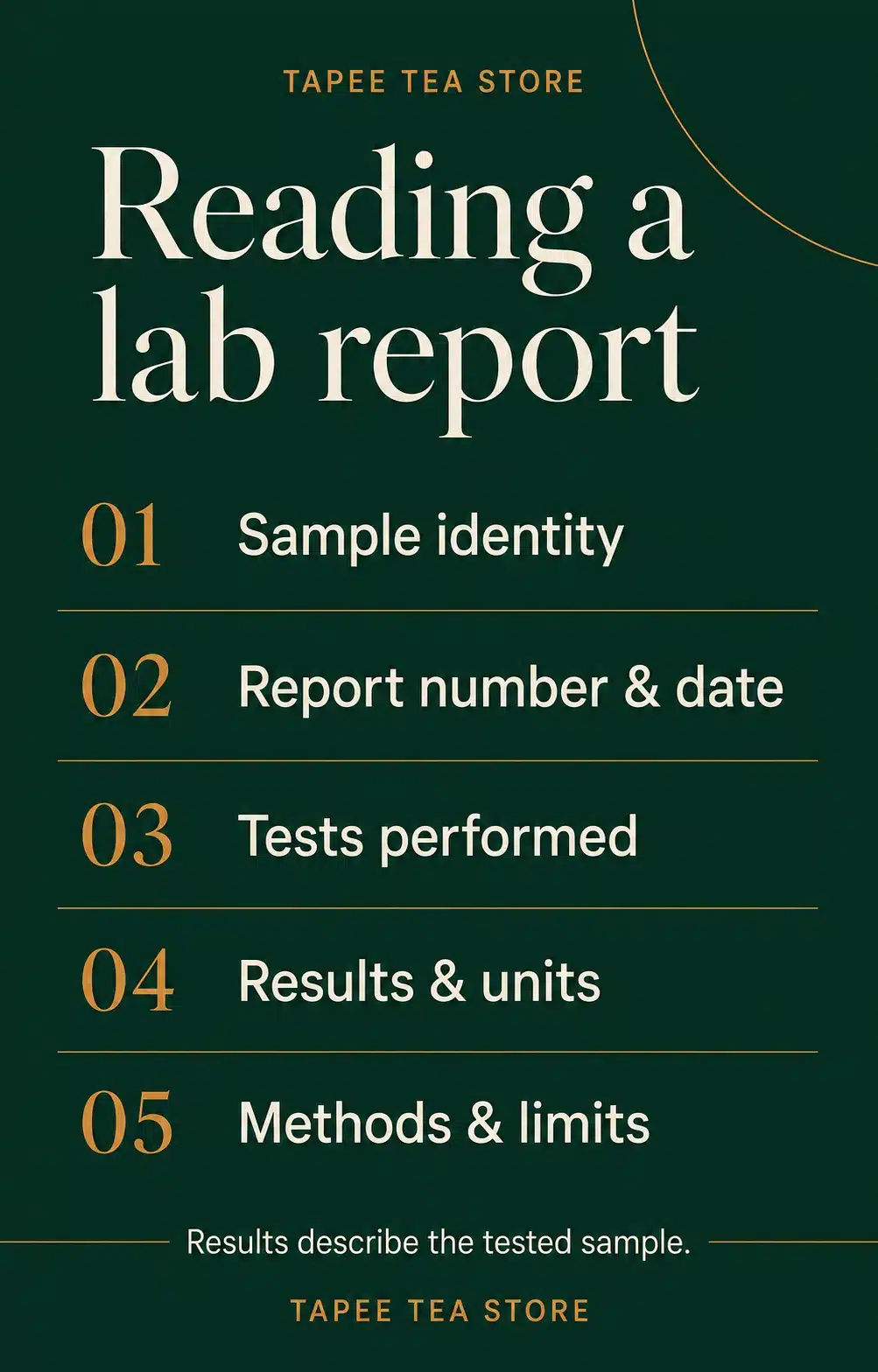
B. What Quality Testing Includes

Microbial testing measures total bacteria count (aerobic plate count), yeast and mold levels, and screens for specific pathogens like E. coli and Salmonella. Quality products should meet FDA and international food safety guidelines.

Heavy metal screening tests for lead, arsenic, mercury, and cadmium. Standards require levels below FDA limits—specifically, less than 2 micrograms of lead per serving. This testing is critical for herbs grown in agricultural areas where soil contamination may occur.

Pesticide residue testing screens for common agricultural chemicals. This is especially important for non-organic herbs and should meet EPA and USDA limits for safety.

Identity verification confirms herbs are what the label claims, detecting substitutions or fillers through microscopy or DNA testing. This prevents the common practice of substituting expensive herbs with cheaper alternatives.

Potency and consistency testing measures active compounds, ensures batch-to-batch consistency, and validates that traditional ratios are maintained. This guarantees you’re getting the same quality product every time.

C. Third-Party vs. In-House Testing

Third-party testing matters because of independence—no conflict of interest when an external lab evaluates your product. Accredited labs with ISO 17025 certification provide credibility. Transparency allows customers to verify results. Third-party testing has become the industry standard for serious brands committed to quality.

Red flags to watch for: vague claims like “we test our products” without sharing results, no lab name or certification numbers provided, “trust us” messaging without documentation, and certificates that look homemade or contain vague information.

What to look for in quality brands: named testing lab such as Eurofins, SGS, or NSF; recent test dates within 6-12 months; specific results rather than just “passed”; and batch tracking systems that trace your product to specific test results.

D. How Tapee Tea Store Approaches Quality

At Tapee Tea Store, we test all herb batches through third-party laboratories before blending. Our verification process includes heavy metal screening on every batch and microbial testing following FDA guidelines. We maintain documentation for every batch and make results available upon request.

We share this information because transparency builds trust. Customers deserve to know what they’re consuming. Quality should be provable, not just claimed. We believe traditional herbs combined with modern safety standards represents the responsible approach to Thai herbal tea.

Our commitment includes lab-testing ingredients (not just finished product), maintaining documentation for every batch, sourcing organic herbs when possible, and honoring traditional formulas while meeting contemporary safety standards.

How to Choose Quality Thai Herbal Tea

A. Questions to Ask Any Brand

About sourcing: Where are herbs sourced from? Are suppliers vetted for quality? Are herbs organically or conventionally farmed? Does the brand use single-source or multiple suppliers?

About testing: Do you conduct third-party lab testing? Which lab do you use? Can I see recent test results? How often do you test batches?

About formulation: Is this based on traditional Thai formula? What are the herb ratios? Who developed the blend? Are there any fillers or additives?

About transparency: Can you trace batch numbers? Do you publish test results? Where is tea processed and packaged? What quality certifications do you have?

B. Red Flags to Avoid

Suspicious signs include: extremely cheap prices (quality ingredients and testing cost money), no ingredient sourcing information, vague “proprietary blend” claims hiding ratios, no contact information or customer service, health claims that sound too good to be true, no batch tracking or traceability, refusal to discuss testing, and lack of professional presentation.

Safety red flags: previously recalled or flagged products, generic “Thai tea” with no brand identity, products sold only through informal channels, no manufacturing location listed, and unprofessional packaging.

C. Green Flags (Quality Indicators)

Trustworthy signs include: third-party lab test results available upon request, clear ingredient lists with amounts specified, traditional formula documentation, responsive customer service, professional packaging with batch codes, organic or quality certifications, educational content about herbs and their uses, and transparency about sourcing and processing.

The Balance of Tradition and Standards

Thai herbal tea carries centuries of traditional wisdom—formulas refined through generations of observation and practice. Modern safety standards protect consumers from contamination and adulteration. Both elements are essential for quality products. You shouldn’t have to choose between authenticity and safety.

You deserve transparency about what you consume. Testing isn’t about distrust—it’s about safety and accountability. Quality brands welcome questions about their processes because they have nothing to hide.

Not all Thai herbal tea is the same. Traditional formulas with proper herb ratios deliver authentic experiences. Lab testing provides peace of mind. Reputable brands offer both tradition and safety in every cup.

Making informed choices means: asking questions before buying, looking for third-party testing documentation, choosing brands committed to transparency, and supporting companies that respect both heritage and safety standards.

As Thai herbal tea’s popularity grows, quality standards must evolve too. Responsible brands lead the way by setting high bars for testing and transparency. Educated consumers drive industry improvement by demanding proof of quality.

At Tapee Tea Store, we honor traditional Thai herbal wisdom while verifying quality through modern testing. We believe you deserve both authenticity and safety. Have questions about our testing or sourcing? Contact us—we’re happy to share our documentation and discuss how we maintain quality standards while respecting traditional formulas.

Shopping Cart
✓ Lab Verified Free Worldwide Shipping